
Crude Oil Price Today: Live Trends, Forecast & Update
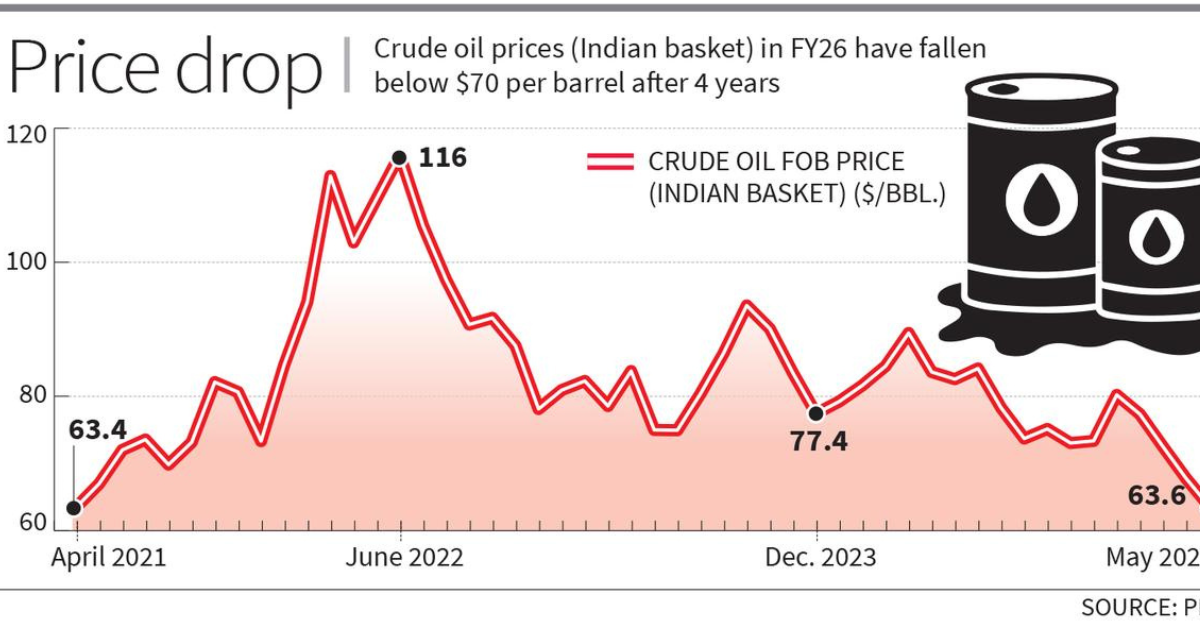
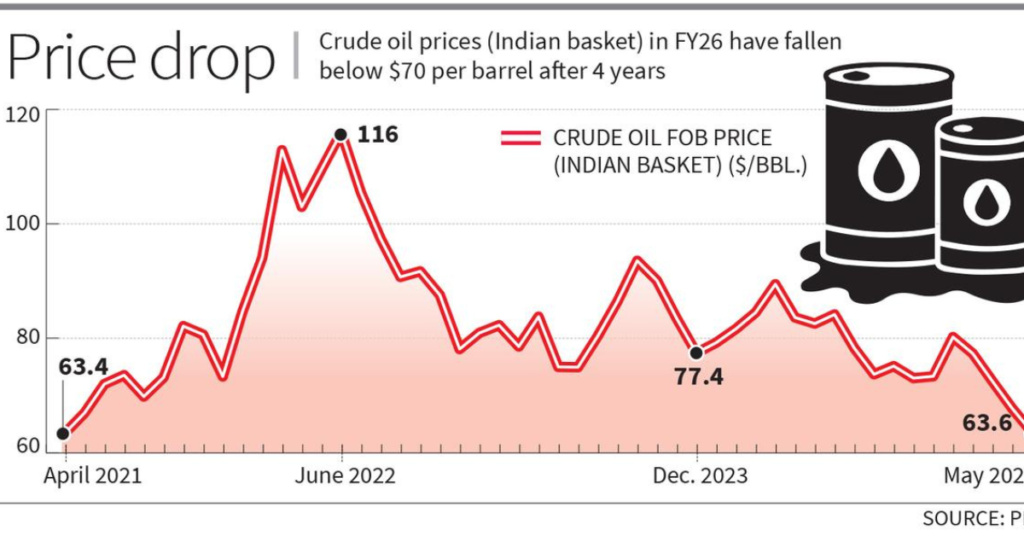
Crude oil prices remain highly volatile in 2026, driven by shifting supply-demand fundamentals, geopolitical tensions, and changing forecasts from major institutions. As of the latest available market data, crude oil is trading at 91.91 USD on the referenced live feed, while broader market trackers show recent daily moves around the high-90s to low-100s range depending on contract and benchmark.
Market Snapshot
The crude oil market is being shaped by a tug-of-war between tighter supply expectations and softer demand outlooks. J.P. Morgan expects Brent crude to average around 60 USD per barrel in 2026, citing soft supply-demand fundamentals and likely surplus conditions later in the year. At the same time, geopolitical disruptions and sanctions continue to create short-term spikes and headline-driven volatility.
Why Prices Move
Crude oil is one of the most reactive global assets because its price reflects politics, inventory levels, refinery demand, shipping risks, and macroeconomic expectations all at once. In 2026, the biggest driver has been the interaction between strong supply growth and uneven demand growth, which pushes longer-term forecasts lower even when near-term prices spike. Sanctions on Russian oil are also changing trade flows, with barrels being redirected and discounts widening in some routes.
Live Trend Reading
Recent market data suggests crude has been moving sharply, with day-to-day swings that reflect how quickly sentiment can change. One live feed shows crude oil at 91.91 USD with a daily range between 88.71 and 102.7 USD, which is a large intraday spread for a benchmark commodity. Other market trackers show WTI futures near the upper-90s and even around 98.07 USD per barrel on May 6, 2026, confirming the broader environment is still elevated and unstable.
Forecast For 2026
The most important 2026 theme is that analysts are not aligned on the price path, even though many agree that the market is sensitive to shocks. J.P. Morgan’s base case is Brent at around 60 USD per barrel in 2026, but the EIA has also projected a much lower WTI average for 2026, at around 51.42 USD per barrel, following earlier forecast revisions. That means traders are balancing near-term spikes against a medium-term belief that supply will eventually cap gains.
Geopolitical Risks
Oil prices can jump quickly when traders fear supply interruptions, especially around major transit routes or sanctioned producers. J.P. Morgan notes that tensions involving Iran may trigger brief rallies, but it does not expect prolonged disruptions to remove a large amount of supply from the market. At the same time, reports have highlighted how restrictions and conflict concerns can push prices sharply higher in the short run.
A useful way to read the market is to separate structural trend from event risk. Structural trend is where supply and demand point over months, while event risk is what happens when a headline hits the screen and sends prices higher or lower in minutes. In 2026, the structural trend appears softer than the headline risk, which explains why oil can rally hard and still face medium-term pressure.
What Traders Watch
Professional traders and energy analysts usually watch five things first: inventory data, OPEC+ decisions, refinery runs, shipping disruptions, and demand signals from the U.S., China, and India. Inventory data matters because it reveals whether the market is tightening or loosening faster than expected. OPEC+ and sanctions matter because they can remove or restore millions of barrels from global supply chains.
Price Outlook Scenarios
The oil market in 2026 can still move in very different directions depending on the balance between surplus and shock. In a bearish case, supply remains ample, inventories rise, and Brent drifts toward the low-60s or below. In a bullish case, new geopolitical disruptions or supply outages could keep prices elevated or even trigger another spike.
FAQ
What is the crude oil price today?
The latest live quote available in the market feed shows crude oil at 91.91 USD.
Why is crude oil so volatile in 2026?
Because the market is reacting to both soft supply-demand fundamentals and fast-changing geopolitical risks.
Will crude oil go up or down in 2026?
Many major forecasts lean lower over the year, but short-term spikes remain likely whenever supply risks increase.
What is the 2026 Brent forecast?
J.P. Morgan expects Brent to average around 60 USD per barrel in 2026.
What is the EIA forecast for WTI in 2026?
The EIA has projected WTI to average around 51.42 USD per barrel in 2026.
Summary
Crude oil prices in 2026 are being pulled in two directions at once: softer medium-term supply-demand fundamentals and high short-term geopolitical risk. The latest live quote and market snapshots show meaningful day-to-day movement, while forecasts from J.P. Morgan and the EIA suggest prices may ease later in the year if supply stays strong. For readers and traders, the best way to follow crude oil is to watch both the live chart and the bigger macro story, because the next big move may come from either inventory data or a geopolitical shock
You may also like this: best digital marketing agency in Agra,